
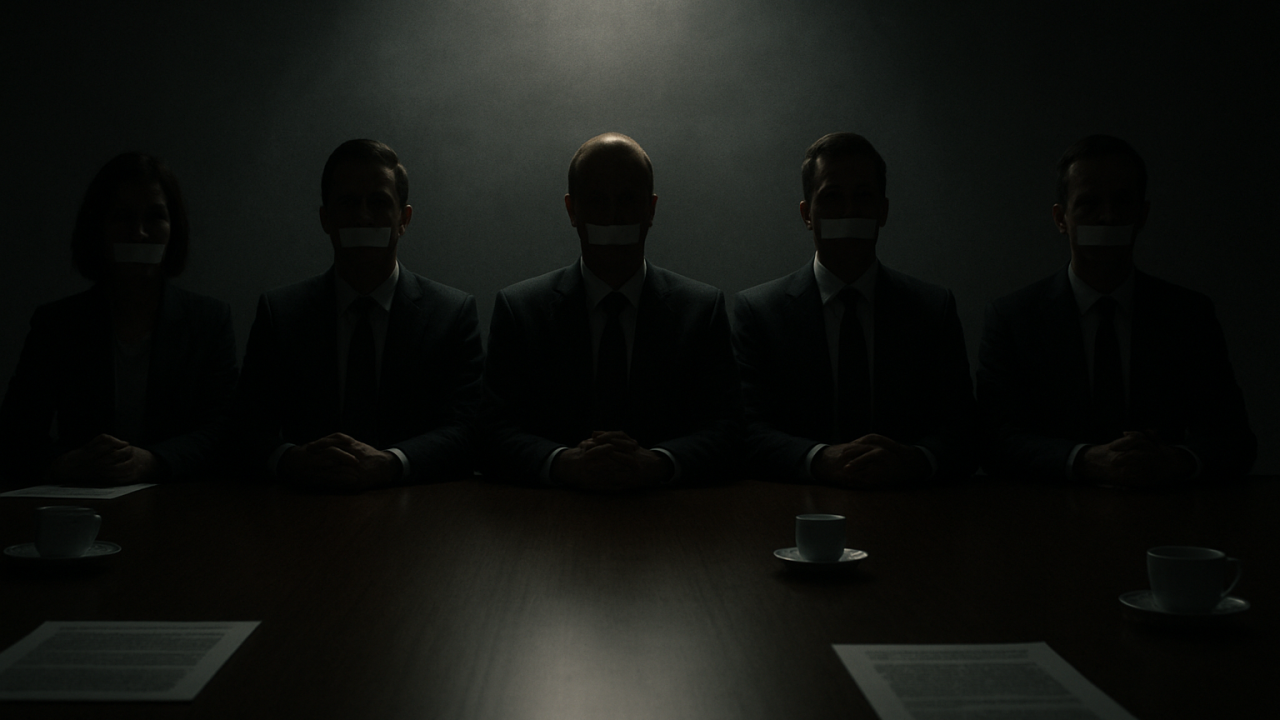
It does not matter whether the proposal was sent by email or presented in a meeting room. The phenomenon can be the same: after a process that seemed to be moving forward, the client stops responding.
For the salesperson, this is usually frustrating. For the client, it is often just postponement. But in reality, behind that silence there is usually something deeper: a pending conversation that neither side managed well enough.
The account executive’s first reaction is often to think: “They disrespected me.” And sometimes there may be some truth to that. But it is also worth asking a few uncomfortable and professional questions.
Was the opportunity truly qualified?
Was there an urgent need or only superficial interest?
Were we speaking with a real decision-maker or with someone who had no power to move things forward?
Was there budget, timing, and concrete priority?
Did the client ask for a proposal too early, and did we accept in order not to lose momentum?
Very often, the client’s silence exposes a previous weakness in the sales process. Perhaps we confused courtesy with buying intention, interest with commitment, conversation with a real opportunity.
A proposal does not replace proper qualification.
On the other side, there is also responsibility.
Saying “no,” “not now,” “we chose another option,” or “this is no longer a priority” can be uncomfortable. Many people avoid that discomfort and choose to disappear. They do it to avoid confrontation, to avoid disappointing someone, or simply because they lack the professional habit of responding clearly.
However, silence does not eliminate discomfort. It only transfers it.
The salesperson receives it, after investing time, coordinating internal resources, preparing content, and holding reasonable expectations.
Responding with honesty and respect is not only about commercial courtesy. It also speaks to human quality and organizational culture.
A simple “thank you, for now we will not move forward” is worth much more than weeks of silence.
In many cases, the salesperson did not qualify deeply enough and the client did not dare to be clear.
One avoided difficult questions.
The other avoided difficult answers.
And in that empty space, commercial ghosting appears.
For the salesperson, the lesson is to improve diagnosis, qualification, and agreements on next steps.
For the client, the lesson is to practice mature, direct, and respectful communication.
Healthy business relationships are not built only when there is a purchase. They are also built when someone declines with clarity.
Every proposal deserves a response, even if it is a negative one.
And every salesperson deserves to remember that the client’s silence does not always speak about their professional value. Very often, it speaks about a poorly managed process, a postponed decision, or a conversation that no one wanted to have.
Selling better requires courageous conversations. Buying better does too.